
Nestled in the folds of the Eastern Himalayas, remaining in self-imposed isolation for centuries, Bhutan opened up to the world in a glacial pace. The population lived in close harmony with nature, evolving a unique identity, derived largely from a rich religious and cultural heritage.
This country of 700,000 people, roughly the size of Switzerland, is the world's only Mahayana Buddhist country. The Buddhist respect for all sentient beings helped Bhutan protect its pristine ecology and wildlife.
This self-sufficient population was never colonized and had limited contact to the outside world. Buddhism was established in the 8th century by the Indian saint Padmasambhava, popularly known in the Tantric tradition as Guru Rinpoche. Perhaps the most dynamic era in Bhutanese history came in the 17th century with the arrival, in 1616, of Zhabdrung Ngawang Namgyal, the great leader of the Drukpa school of Mahayana Buddhism. He unified the country and established the foundations for national governance and the Bhutanese identity.
In 1907, a historic Assembly of the clergy, the official administration, and the people unanimously elected Gongsar Ugyen Wangchuck as the first hereditary King of Bhutan thus beginning the glorious era of the Wangchuck dynasty. In 2006, the fourth king of Bhutan, Jigme Singye Wangchuck announced that he would abdicate in favor of a constitutional monarchy with a parliamentary democracy. In 2008, the year that marked 100 years of the monarchy saw two important events; the first democratic elections and the coronation of the fifth king, Jigme Khesar Namgyel Wangchuck.
Facts and Figures
Tour Itinerary
DAY 01: ARRIVE PARO BY AIR
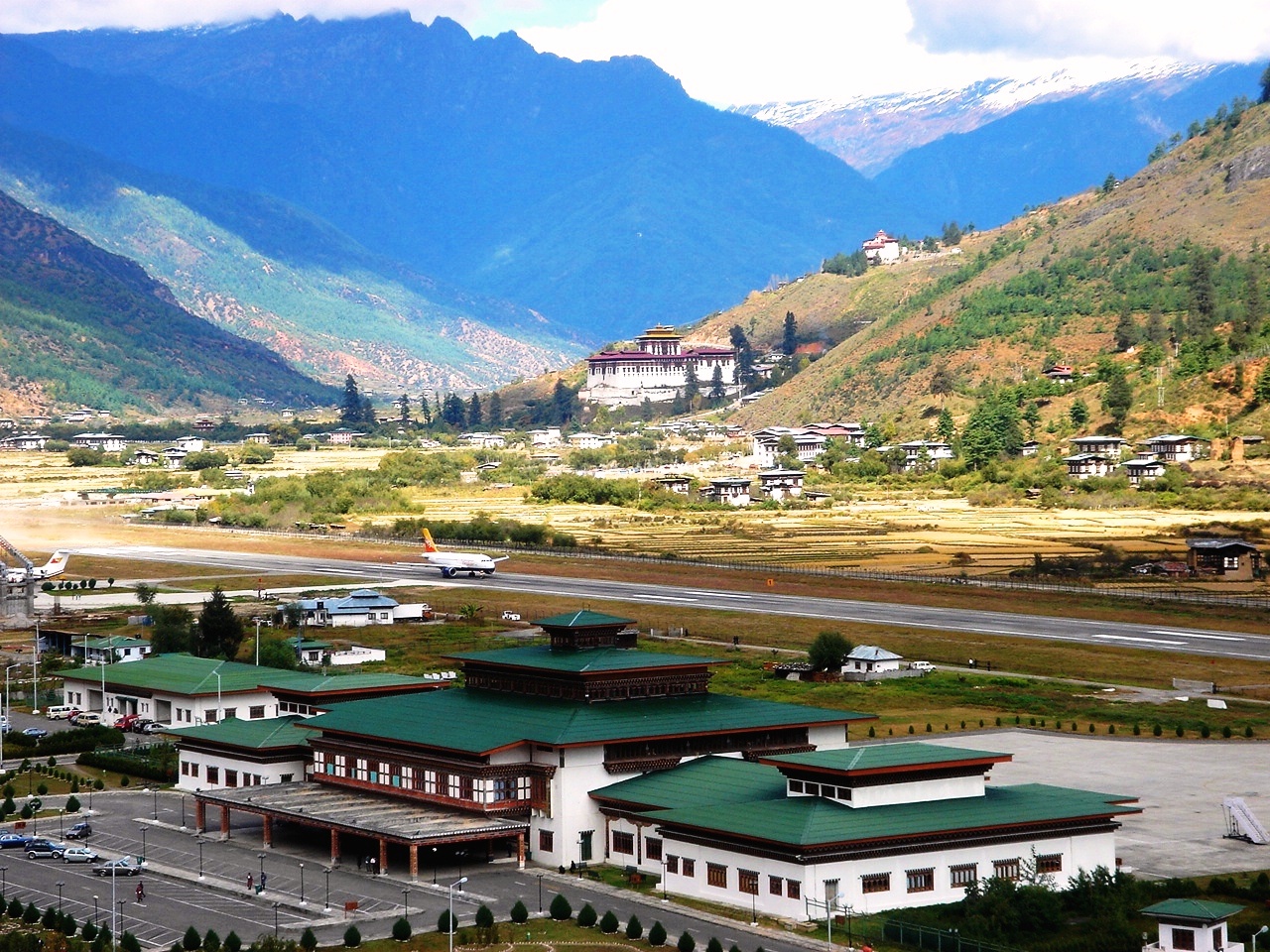
The flight to Paro is one of the most spectacular in entire Himalayas. Whether flying along the Himalayan range from Kathmandu or over the foothills from Kolkata, the journey offers fascinating views and an exciting descent into the Kingdom. Bhutan's first gift to you as you disembark from the aircraft will be cool, clean fresh mountain air. After immigration formalities and baggage collection, you will be met by our representative & transfer to hotel for check-in.
Rest of the day is at leisure
Overnight at the hotel in Paro
DAY 02: PARO – SHANA (17 KMS / 05–06 HOURS WALK)
Trek Distance: 17 km | Time: 5-6 hours | Difficulty: Moderate
The Chomolhari trek starts from Drukgyel Dzong (2,580m) with a short downhill walk on a wide trail. The trail then climbs gently through well maintained rice terraces and fields of millet. Later on we come to apple orchards and forests. Soon the valley widens and we reach the army post of Gunyitsawa (2,810m). This is the last stop before Tibet. We continue upwards to just beyond Sharma Zampa (2,870m), where there are several good camping places in meadows surrounded by trees.
Overnight at camp
DAY 03: SHANA – SOI THANGTHANGKHA (20 KMS / 07–08 HOURS WALK)
Trek Distance: 20 km | Time: 7-8 hours | Difficulty: Moderate to Challenging
The trail again follows the Pa Chhu (Paro river), ascending and descending through pine, oak and spruce forests. After crossing a bridge to the left bank of the river, we stop for a hot lunch. Then we continue along the river, climbing upwards through rhododendron forests and crossing the river once more before reaching our campsite (3,750m).
Overnight at camp
DAY 04: SOI THANGTHANGKHA – JANGOTHANG (14 KMS / 05–06 HOURS WALK)
Trek Distance: 14 km | Time: 5-6 hours | Difficulty: Moderate
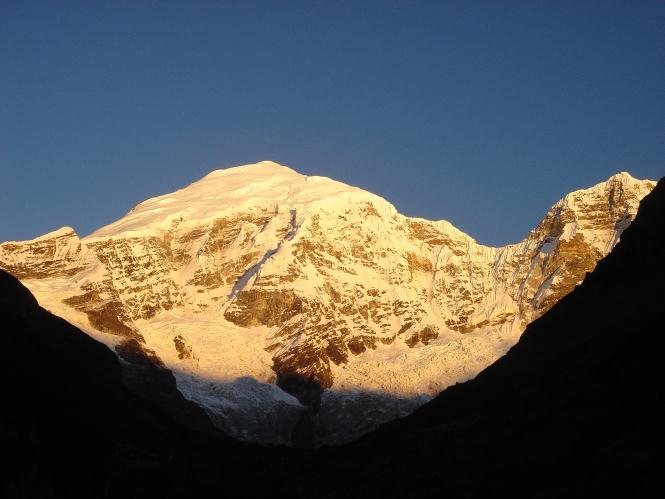
The path ascends for a while till you reach the army camp. We then follow the river above the tree line, enjoying the stunning views of the surrounding peaks. Hot lunch is served at a yak herder's camp. A short walk from here into the valley will takes us to our campsite at Jangothang (4,040m). From here, the views of Mount. Chomolhari and Jichu Drake are superb.
Overnight at camp
DAY 05: JANGOTHANG – LINGSHI (18 KMS / 07–08 HOURS WALK)
Trek Distance: 18 km | Time: 7-8 hours | Difficulty: Challenging
The trail follows the stream for half an hour and crosses the bridge to the right bank. We now start our climb up to the first ridge, enjoying breathtaking view of Mt. Chomolhari, Jichu Drake and Tsrim Khang. The trail then takes us across a fairly level valley floor until the climb to the Nyele-la (4,700m). We descend gradually from the pass to our campsite at Lingshi (4,000m), enjoying the panoramic view of the mountain peaks and Lingshi Dzong as we walk.
Overnight at camp
DAY 06: LINGSHI – SHODU (22 KMS / 08–09 HOURS WALK)
Trek Distance: 22 km | Time: 8-9 hours | Difficulty: Challenging
The Laya – Gasa route leaves the Chomolhari trek route here. Our trail climbs up towards a small white Chorten on a ridge above the camp, then turns south up the deep Mo Chu valley. The trail stays on the west side of this largely treeless valley, climbing steeply a short distance above the Mo Chu. It then crosses the river, and climbs steeply for two hours to Yeli-la pass (4,820m). On a clear day, you can see Mt. Chomolhari, Gangchhenta, Tserim Khang and Masang Gang from this pass. Descend alongside a stream to a rock shelter in the cliff face, and then continue on downstream till reaching Shodu (4,100m), where we will camp in a meadow with a Chorten in it.
Overnight at camp
DAY 07: SHODU – BARSHONG (16 KMS / 06–07 HOURS WALK)
Trek Distance: 16 km | Time: 6-7 hours | Difficulty: Moderate
We are now back at the tree line, and our path follows the course of the Thimphu Chu (river), descending through rhododendron, juniper and mixed alpine forests. There are stunning views of rocky cliff faces and waterfalls along the way. We stop at the riverside for a hot lunch. Then the trail takes us gradually upwards to the ruins of Barshong Dzong (3,600m), near which we camp for the night.
Overnight at camp
DAY 08: BARSHONG – DOLAM KENCHO (15 KMS / 05–06 HOURS WALK)
Trek Distance: 15 km | Time: 5-6 hours | Difficulty: Moderate
The trail descends gently through a dense forest of rhododendron, birch and conifers, then drops steeply to meet Thimphu Chh (river). The trail runs along the left bank of the river, climbing over ridges and descending into gullies where side streams runs down into the river. The final stage of the trail climbs around a cliff face high above the Thimphu Chu river, coming out onto pastureland where we camp for the night at 3,600m.
Overnight at camp
DAY 09: DOLAMKENCHO – DODENA – THIMPHU (08 KMS / 03 HOURS WALK)
Trek Distance: 8 km | Time: 3 hours | Difficulty: Easy
The trail winds in and out of side valleys above Thimphu Chhu, making a long ascent through a forest of conifers and high altitude broadleaf species to a pass at 3,510m. The trail then drops steeply to the river and following it southward to the road head at Dodena, (2,600m). The transport meets us here, and we drive to Thimphu.
On arrival, in Thimphu check-into the hotel. The capital town of Bhutan and the centre of government, religion and commerce, Thimphu is a unique city with unusual mixture of modern development alongside ancient traditions. With the population of about 90,000 it is perhaps still the world's only capital city without a traffic light.
Overnight at the hotel in Thimphu (Altitude 2,320m)
DAY 10: THIMPHU
After breakfast, visit Buddha Point (Kuensel Phodrang). Located at a short drive from Thimphu city centre, visitors can get a good overview of the Thimphu valley from the Buddha point (KuenselPhodrang). You can pay your obeisance and offer prayers to the Buddha, the largest statue in the country and then walk around and take a glimpse of the valley.
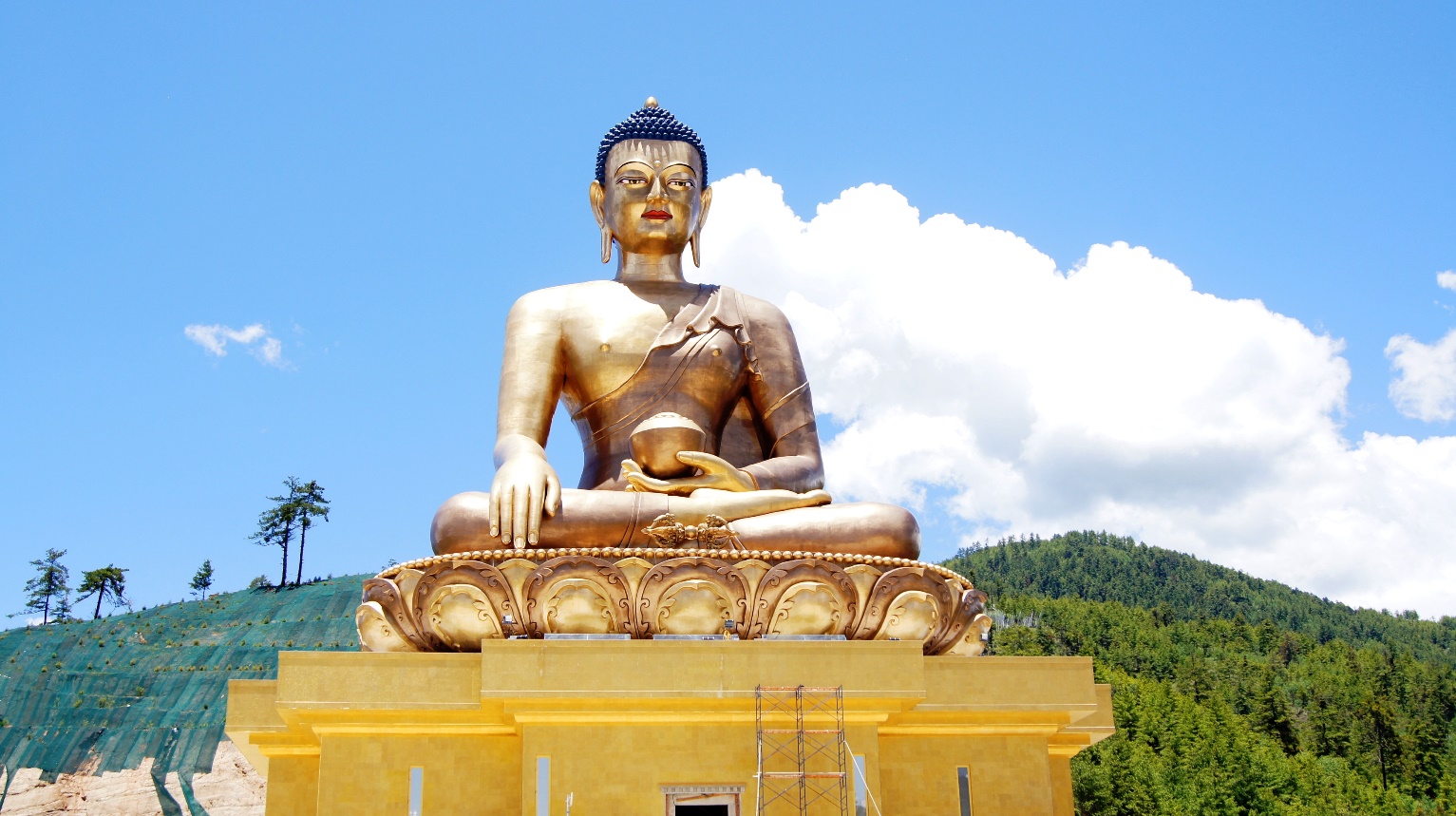
Commence the "Buddha Nature Train" from Buddha point to Changangkha Lhakhang (02 hours easy hike). The hike from Buddhapoint to Changangkha Lhakhang is the most popular one to see the locals of Bhutan and at the same time take a forest bath. As you hit the trail you will be greeted by thousands of prayer flags and welcomed by a pristine forest of pines, birch, and rhododendron trees. If you are lucky, you can encounter few wild pheasant and bore. The trail is well maintained and at some places along the trails Gazebos are set up from where you can have a spectacular view of Thimphu valley and ends at Changangkha Lhakhang.
Continue visit the Changangkha Lhakhang, which is a fortress like temple and monastic school perched on a ridge above Thimphu, south of Motithang. The temple was established in 12th century on a site chosen by Lama PhajoDrugomShigpo, who came from Tibet. The central statue here is Chenrezig in a manifestation with 11 heads. From temple courtyard, there is fascinating view of Thimphu valley.
After lunch, take a short drive (15 km) to Pangri Zampa, 16th century one of the oldest monasteries in Bhutan located just north of Thimphu. Here is a monastic school where Buddhist student's monks learn Lamaism and astrology based on Buddhist philosophy.
Further visit to Bhutan Post Office, the Postal Service in Bhutan was first launched on 10th October 1962 with the opening of a post office in Phuentsholing. In the same year, post offices also opened in Paro and Thimphu.
Visit Traditional Paper-making factory, which comprises of two enterprises; the unit in Thimphu produces traditional handmade paper from natural plants mainly from 'Daphne' plant species which is insect-resistant. The other unit in Jimina, 22 km from the centre Thimphu town, recycles waster papers. The traditional handmade papers are widely used for religious scripts, packing materials, hand-carry bags, lampshades, envelopes, calendars. The paper looks a lot like Japanese washi, and in fact a lot of Bhutanese paper is exported to Japan also.
Evening, visit Trashichhoedzong: This impressive fortress/monastery houses Secretariat building, the throne room of His Majesty, the King and various government offices. It is also the summer residence of Chief Abbot and central monk body.
Overnight at the hotel in Thimphu.
DAY 11: THIMPHU – GANGTEY (150 KMS / 05 HRS DRIVE)
After breakfast, check-out from the hotel & drive Gangtey (Phobjikha) enroute visiting Dochula Pass (Altitude 3080m). In Bhutan, the passes are marked by a large Bhutanese Chorten and prayer flag. Dochula pass offers the most spectacular view over the high peaks of the eastern Himalayas on a clear day. And also via Wangdue Phodrang, where you can visit the local market and explore newly developed town. The district of Wangdue Phodrang is also famous for its bamboo products, slate and stone carvings. Further ahead pass through dense forests and oak, rhododendron tress, reaching at Gangtey (Phobjikha).
The valley of Gangtey is one of the most beautiful spots in Bhutan. The surprise of finding such a wide, flat valley without any trees after the hard climb through dense forests is augmented by an impression of vast space, and extremely rare experience in Bhutan where most of the valleys are tightly enclosed.

After lunch, take a walk around Gangtey village and visit Gangtey Goempa. Perched on a small hill that rises from the valley floor, the Gangtey Monastery is the only Nyingmapa monastery on the western side of the Black Mountain's Gangtey valley, Bhutan and also the biggest Nyingmapa monastery in Bhutan. The Monastery is surrounded by a large village inhabited mainly by the families of the 140 Gomchens who take care of the Monastery.
Overnight at the hotel in Gangtey
DAY 12: GANGTEY
After early breakfast, enjoy the Gangtey Nature Trail (Distance: 5.5 km, Time: approx. 2 hours, Difficulty level: Easy).
Walk Distance: 5.5 km | Time: 2 hours | Difficulty: Easy
This pleasurable walk provides opportunity to get nice feel of Phobjikha valley. From the small hilltop overlooking Gangtey Goemba, you head downhill through flower meadows to Semchubara village and from here through beautiful forests and into open valley. The trail ends at the local community school after passing a chorten and Khewal Lhakhang.
Later proceed for the day excursion to Tangjey Lhakhang (3050 mtr) (Distance: 10-12 km approx, Time: 4-5 hrs & Difficulty level: moderate).
Excursion Distance: 10-12 km | Time: 4-5 hours | Difficulty: Moderate
We set out on a day hike toward the southeast direction through the vegetation of dwarf bamboos that adorns the Phobjikha valley, where the rare species of Black Necked Cranes resides during winter (beginning of November till mid-March). After an hour of easy hike, we reach small settlement of Kilkhorthang village. After a short rest to enjoy the dramatic landscape of the valley, we continue towards Tanjey thru vegetable fields & orchards. Tangey Lakhang (temple) is dedicated to Lord Buddha and its local protective deity Yeshi Gempo. The original foundation of the temple dates back to 1517 – 1554. After a thorough scanning of the temple, we head back to hotel crossing a wooden bride over the crystal-clear river. A day can be ended with a little celebration of locally distilled traditional drink.
Overnight at the hotel in Gangtey
DAY 13: GANGTEY – PUNAKHA (75 KMS / 03 HRS DRIVE)
After breakfast, check-out from the hotel and drive to Punakha, the old capital town of Bhutan.
Enroute, proceed for the day excursion to Chimi Lhakhang (from hotel it is about 15 minutes' drive till motorable road and then walk starts through paddy fields and villages. This is total about 1½ hour walk, including both way). The Chimi Lhakhang, situated on a hillock in the centre of the valley, also known as the temple of fertility. It is widely believed that couples who do not have children and wanting one, if they pray at this temple, they are usually blessed with a child very soon. The trail leads across rice fields to the tiny settlement of Pana, meaning 'field'. A walk through the village near the temple will give you rare glimpses into the daily life and lifestyle of the villagers.
After checking into hotel, proceed to visit Punakha Dzong, a massive structure built at the junction of two rivers. It was the capital of Bhutan until 1955, and still serves as the winter residence of the monk body.
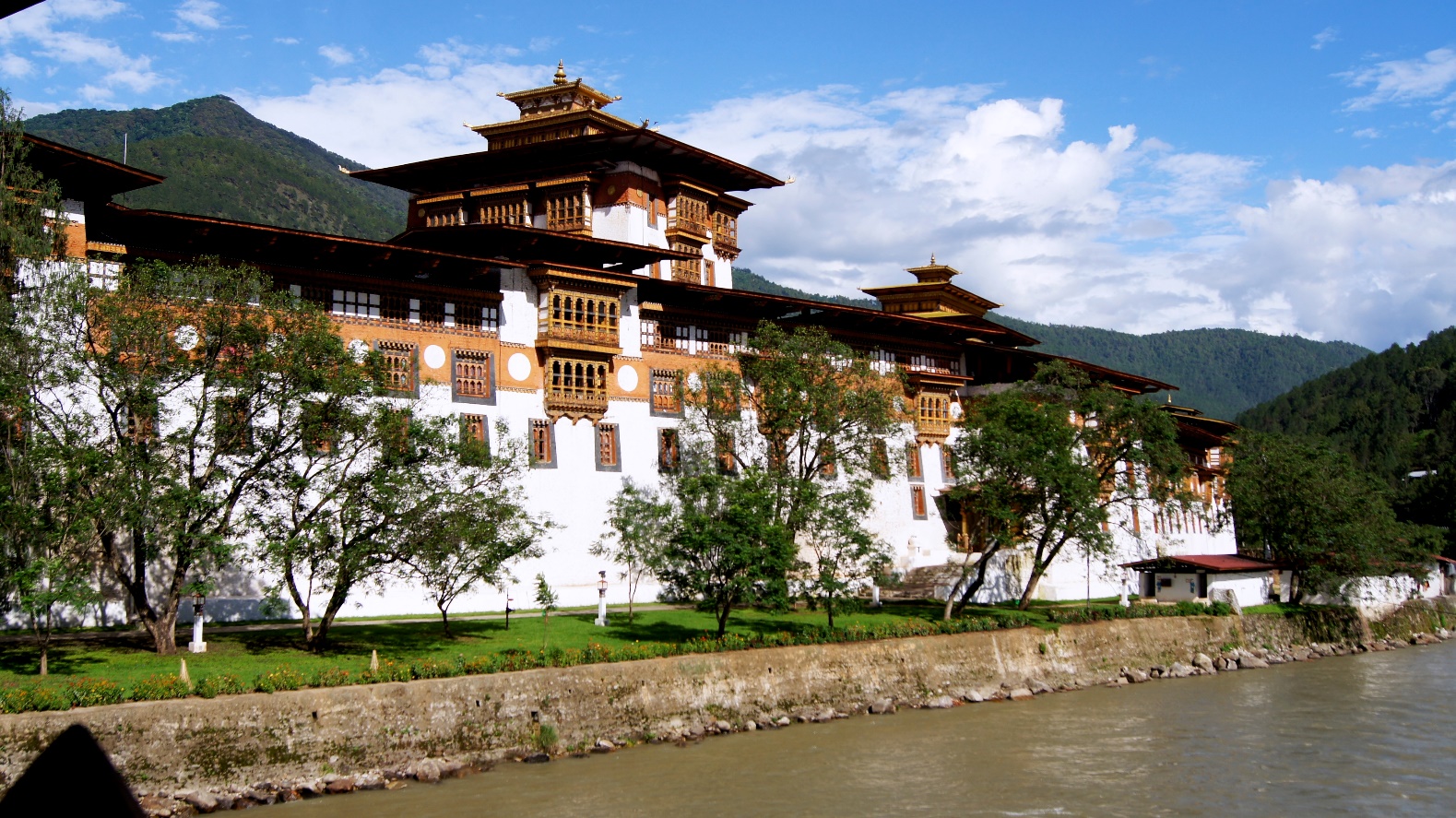
Evening can be spent exploring Punakha village located right on the bank of river.
Overnight at the hotel in Punakha.
DAY 14: PUNAKHA
After breakfast, hike up through fields of chilies, cabbages and rice along the banks of the Mo Chhu to Khamsum Yuelley Namgyal Chorten, a stunning monument recently built by the Queens and consecrated in 1999.
Later visit to Sangchhen Dorji Lhuendrup Lhakhang Nunnery. Perched on a ridge amid pine trees and overlooking valleys of Punakha and Wangdue Phodrang, gleams the magnificent structures of Sangchhen Dorji Lhuendrup Lhakhang(Temple). The temple houses a 14-foot main bronze statue of Avalokiteshvara (Chenrigzig chagtong chentong). Other statues include those of Guru Padma Sambawa, Gautama Buddha, Zhabdrung Ngawang Namgyel, Tsela Namsum, the 21 Taras and Tsepamay (Buddha of longevity). The Avalokiteshvara statue, one of the biggest in the country, was the handiwork of entirely local Bhutanese artisans. The temple complex also houses a permanent higher learning and meditation centre for nuns where, apart from religious trainings, it provides life skill training such as tailoring, embroidery, statue making and thangka painting.
Overnight at the hotel in Punakha
DAY 15: PUNAKHA – PARO (120 KMS / 4½ HRS DRIVE APPROX)
After breakfast, check-out from the hotel and drive to Paro along scenic highway, enroute visit Simtokha Dzong, the oldest fortress of the country built in 1627 which now houses the School for Buddhist studies.
On arrival in Paro, check into the hotel. After lunch, proceed to visit Ta Dzong, originally built as Watchtower, which now houses National Museum. The extensive collection includes antique Thangkha paintings, textiles, weapons & armour, household objects and a rich assortment of natural and historic artifacts.
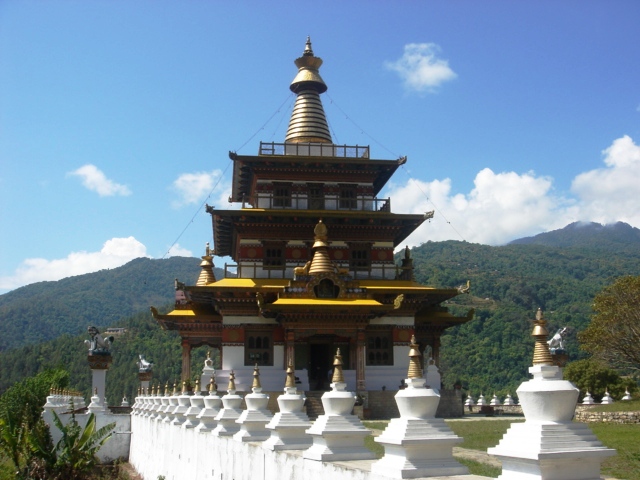
Ta Dzong visit immediately followed by a short walk down the trail to visit Rinpung Dzong (Paro Dzong), meaning ("fortress of the heap of jewels"), which has a long and fascinating history. Along the wooden galleries lining the inner courtyard are fine wall paintings illustrating Buddhist lore such as four friends, the old man of long life, the wheel of life, scenes from the life of Milarepa, Mount. Sumeru and other cosmic Mandala.
Overnight at the hotel in Paro.
DAY 16: PARO
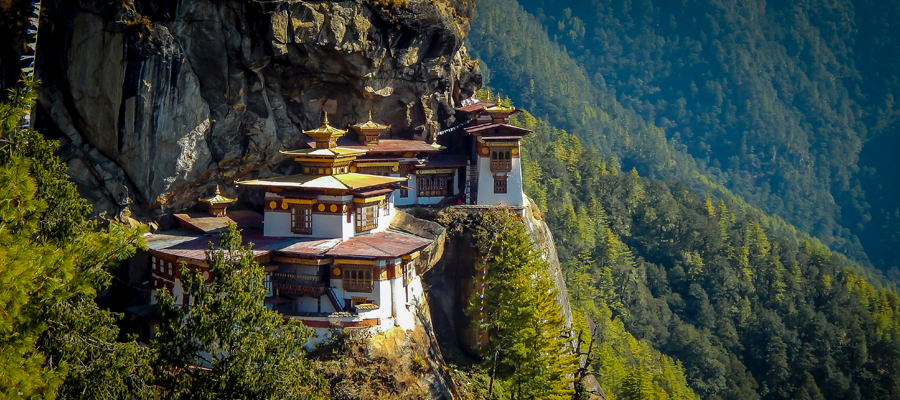
After breakfast excursion to Taktshang Monastery or Tiger's Nest (approx. 5 hours walk): It is one of the most famous of Bhutan's monasteries, perched on the side of a cliff 900m above the Paro valley floor. It is said that Guru Rinpoche arrived here on the back of a tigress and meditated at this monastery and hence it is called 'Tiger's Nest'. This site has been recognised as a most sacred place and visited by Shabdrung Ngawang Namgyal in 1646 and now visited by all Bhutanese at least once in their lifetime. On 19 April, 1998, a fire severely damaged the main structure of building but now this Bhutanese jewel has been restored to its original splendour.
Afternoon drive to Drukgyel Dzong, a ruined fortress where Bhutanese warriors fought Tibetan invaders centuries ago. The snowy dome of sacred Chomolhari, "mountain of goddess" can be seen in all her glory from the approach road to the Dzong.
Evening, visit the 7th century Kyichu Lhakhang, one of the 108 temples built in the Himalayas by Tibetan King, Songtsen Gampo. The building of this temple marks the introduction of Buddhism in Bhutan.
Overnight at the hotel in Paro.
DAY 17: DEPART PARO BY AIR
After early breakfast at the hotel, drive to the airport for flight to your onward destination. Our representative will help you with exit formalities and then bid you farewell.
Ready to Experience Bhutan?
Book your unforgettable journey to the Land of Happiness today!
Contact Us